
Those small, soft bumps you feel under your chin are most likely swollen lymph nodes. In vast majority of cases, they swell because your body is actively fighting off an infection. This is a normal part of your immune system doing its job, and it usually resolves on its own.
What Are Lymph Nodes Under Your Chin?
The lymph nodes located directly under chin are called submental lymph nodes. They sit in soft tissue between your jawbone and front of your neck. You also have a chain of submandibular lymph nodes that run along each side of your jawline.
These nodes are part of your lymphatic system. Think of them as tiny filter stations. They trap bacteria, viruses, and other foreign substances so that your white blood cells can fight them off. When a node is actively filtering out an infection, it swells up. That swelling is what you feel when you press under your chin.
Your lymphatic system closely connected to your overall blood cell health. If you are curious about what happens when your lymphocyte count drops too low, this explains common reasons and what they can mean: What Causes Low Lymphocytes
Why Do Lymph Nodes Under Chin Swell?
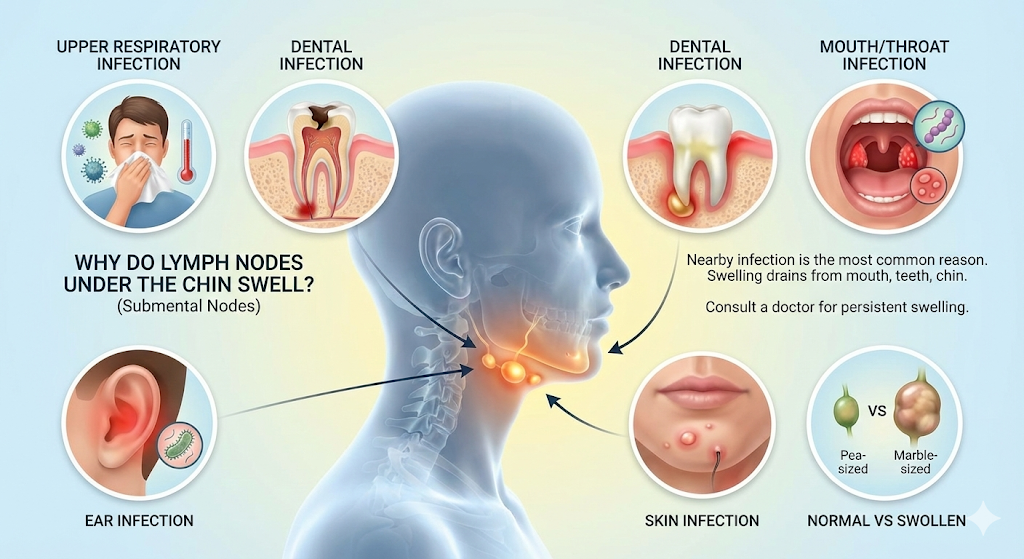
The most common reason a nearby infection. Because these nodes drain fluid from your mouth, teeth, tongue, lower lip, and front of your chin, anything happening in those areas can cause swelling.
Here are most frequent causes, roughly ordered from most common to least:
- Upper respiratory infections like common cold or flu. These are by far most typical trigger. The swelling usually shows up on both sides and goes away as infection clears.
- Dental infections or abscesses. A decayed tooth, gum infection, or abscess in your lower jaw can send bacteria directly into submental lymph nodes. The swelling may be on one side, depending on which tooth affected.
- Mouth sores or oral infections. Canker sores, oral thrush, or herpes simplex virus outbreaks in or around mouth can all trigger lymph node swelling under chin.
- Throat infections. Strep throat, tonsillitis, and pharyngitis are common culprits. When your throat is source, you might also feel swollen nodes along sides of your neck.
- Ear infections. While ear infections more commonly affect lymph nodes behind ear or along jaw, submental nodes can sometimes respond too, especially if infection spreads.
- Skin infections near chin. An infected cut, acne cyst, or ingrown hair on or around your chin can cause a nearby lymph node to swell.
In most of these situations, node feels tender, movable, and slightly swollen. It may be about size of a pea or a small marble. The swelling usually goes down within two to three weeks once infection treated or clears on its own.
If you have also been noticing pain on one side of your throat along with swelling under chin, this explores what that combination might mean: Why One Side of Your Throat Hurts When Swallowing
People also ask
Nodes swollen due to a cold often appear on both sides and resolve as your respiratory symptoms fade. Dental-related swelling is frequently one-sided and may be accompanied by tooth pain or gum sensitivity.
Most swollen lymph nodes are felt as small, movable bumps beneath the skin rather than visible protrusions. They typically range from the size of a pea to a small marble when they are actively fighting an infection.
Can Swollen Lymph Nodes Under Chin Be Something More Serious?
In rare cases, yes. While infections account for overwhelming majority of swollen lymph nodes, there are some less common conditions worth knowing about.
Autoimmune conditions. Disorders like lupus, rheumatoid arthritis, or sarcoidosis can cause lymph nodes to swell in multiple areas of body, including under chin. This type of swelling tends to be persistent, affects more than one group of nodes, and comes with other symptoms like joint pain, fatigue, or skin changes.
Cat scratch disease. This is a bacterial infection caused by Bartonella henselae. It typically develops after a scratch or bite from an infected cat. The lymph node closest to wound swells up, sometimes significantly. If scratch on face, hand, or arm, submental or submandibular nodes can be affected.
Certain medications. Some drugs, including certain seizure medications and immunosuppressants, can cause lymph nodes to enlarge as a side effect. This is uncommon, but worth mentioning if you have started a new medication and notice swelling.
Lymphoma and other cancers. This is concern most people worry about, and it important to put it in perspective. Cancerous lymph nodes tend to behave differently from nodes swollen by infection. They are usually painless, feel firm or hard to touch, do not move easily when pressed, and grow steadily over weeks without signs of infection. According to U.S. National Library of Medicine, slow and painless swelling of a lymph node may sometimes point to cancer or a tumor, while sudden and tender swelling usually a sign of infection. You can read more about different patterns of lymph node swelling here: Swollen Lymph Nodes Overview
Having one of these risk factors does not mean you have cancer. It simply means swelling pattern worth discussing with your doctor so they can evaluate it properly.
People also ask
Cancerous nodes are generally painless, feel hard or firm to the touch, and tend to stay in place rather than moving under your skin. They also usually persist and grow over several weeks without any obvious infection present.
Yes, although it is rare, some drugs including seizure medications or certain immunosuppressants can lead to enlarged lymph nodes as a side effect. This type of reaction usually appears shortly after beginning a new treatment.
When Should You See a Doctor?
Most swollen lymph nodes do not need medical attention. But there are specific signs that suggest you should get checked. You should reach out to your doctor if:
- The node has been swollen for more than two to three weeks and not getting smaller.
- The swelling keeps growing over time.
- The node feels hard, fixed in place, or irregularly shaped.
- You have unexplained fever, night sweats, or weight loss alongside swelling.
- Multiple groups of lymph nodes are swollen at same time (for example, under chin, in armpits, and in groin).
- You have no obvious signs of infection but node remains enlarged.
Your doctor may start with a physical exam and ask about recent illnesses. If swelling does not have a clear explanation, they might order blood work, imaging like an ultrasound, or in some cases, a biopsy to take a small tissue sample.
People also ask
If a node remains swollen for more than two or three weeks without shrinking, it is time to seek medical advice. You should also reach out sooner if the swelling is actively increasing in size.
How Are Swollen Lymph Nodes Under Chin Treated?
Treatment depends entirely on cause. For bacterial infections like strep throat or dental abscesses, antibiotics usually resolve swelling. Viral infections typically need time, rest, fluids, and otc pain relief.
A warm compress applied to area can ease tenderness while node is swollen. Ibuprofen may also help with discomfort.
For less common causes like autoimmune conditions or lymphoma, treatment is more specialized and guided by your doctor. The key getting right diagnosis first.
People also ask
A warm compress can be very effective at easing the tenderness and discomfort associated with a swollen node. Apply it gently to the area for short periods to see if it provides relief.
Conclusion
A swollen lymph node under your chin is almost always your immune system responding to a nearby infection. It a sign that your body working way it should. In most cases, swelling goes down on its own as infection clears.
If swelling sticks around for more than a few weeks, grows steadily, or comes with symptoms like unexplained weight loss or night sweats, it worth having your doctor take a look. Early evaluation can give you answers and, more importantly, peace of mind.
